Is Plastic Really Less Sustainable Than Cardboard?

Plastic and cardboard are two of the most common packaging materials used worldwide. Both have different environmental credentials, and the sustainability of each depends on a range of factors, including recycled content, transportation, how the material is used, and what happens to it at the end of its life.
Essentially, the “best” packaging is the one that performs its job using the fewest resources over its entire lifecycle. Extended Producer Responsibility (EPR) regulations increasingly hold businesses accountable for the packaging they use, and a considered approach to packaging forms a genuine part of a company's wider Corporate Social Responsibility (CSR) commitments.
In this guide, we will take you through the differences between cardboard and plastic, the importance of recycled content and lifecycle assessments, and how to choose the right packaging solutions for your business.
Contents
- Plastic vs Cardboard Packaging at a Glance
- Why Cardboard Is Often Assumed To Be the Sustainable Choice
- The Sustainability Challenges of Cardboard
- Why Plastic Can Often Be a More Sustainable Option
- The Sustainability Challenges of Plastic Packaging
- The Importance of Recycled Content
- Why Lifecycle Assessments Matter More Than Material Alone
- Choosing the Right Packaging for Your Business
Plastic vs Cardboard Packaging at a Glance
See below a table that compares plastic and cardboard packaging against a range of key factors:
|
Factor |
Plastic |
Cardboard |
|
Weight |
Very lightweight |
Heavier |
|
Moisture Resistance |
Excellent |
Limited |
|
Product Protection |
Excellent |
Good |
|
Recycled Content Available |
Yes |
Yes |
|
Recyclability |
Depends on the type and facilities |
Widely recyclable when clean |
|
Reusability |
Often high |
Limited |
|
Transport Efficiency |
Excellent |
Low due to bulk |
Why Cardboard Is Often Assumed To Be the Sustainable Choice
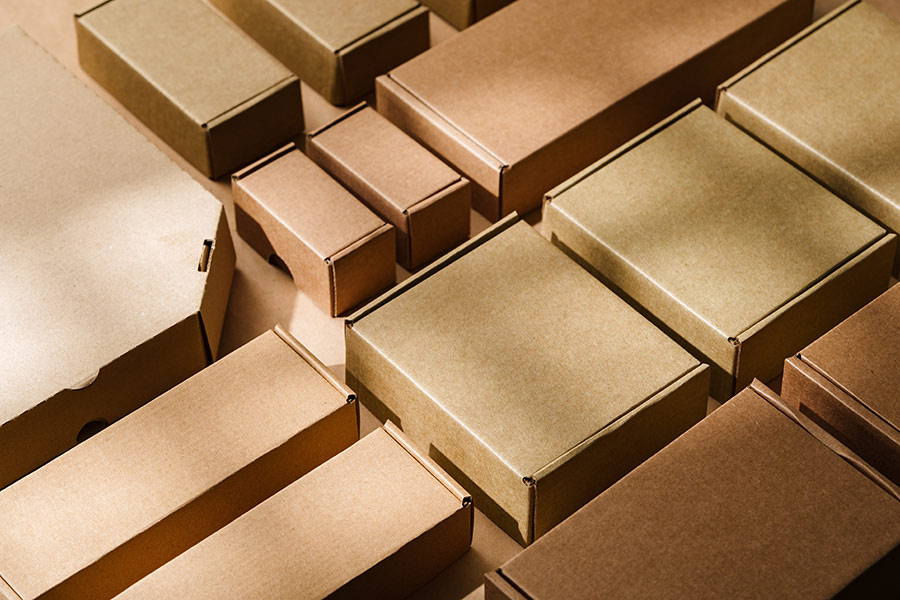
Cardboard is made from paper pulp, a renewable source made from trees that can be replanted and managed responsibly. The UK also has a well-established recycling infrastructure for cardboard, with the national recycling rate for cardboard standing at around 70%. Under the right conditions (a combination of moisture, oxygen, heat, and microorganisms), cardboard breaks down naturally, reinforcing the idea that it leaves a lighter footprint at the end of its life.
This combination of factors has shaped a perception that cardboard is associated with environmental responsibility. However, cardboard is not automatically the lowest-impact option in every situation.
The Sustainability Challenges of Cardboard
Like any packaging material, cardboard has some environmental trade-offs to consider:
- Tree Harvesting: Tree harvesting is the process of cutting down trees to use the material for commercial purposes, such as for creating cardboard. In some cases, forests that are used for tree harvesting are sustainably managed, but it still has downsides such as having an impact on habitats and ecosystems, biodiversity, and long-term harm to woodlands.
- Significant Water Consumption: To produce cardboard, a significant amount of water must be used in production, which can strain local water resources.
- Energy-Intensive Manufacturing: Turning raw wood fibres into usable cardboard requires considerable energy, from pulping and drying through to pressing and shaping the final material. This process generates carbon emissions long before the packaging reaches a business or consumer.
- Greater Weight & Volume During Transport: Cardboard is bulkier and heavier than many plastic alternatives, which means fewer items fit into a single shipment. This increases the number of journeys needed to transport the same volume of goods, driving up fuel consumption and emissions.
- Reduced Performance in Wet Environments: Cardboard loses much of its structural strength when exposed to moisture. This makes it a less reliable option for products that need to withstand humid conditions, refrigeration, or outdoor storage.
- Damage Can Lead to Increased Product Waste: Because cardboard offers less protection against impact and moisture than some plastics, products packaged in it face a higher risk of damage in transit. This can result in more returns, replacements, and wasted stock, which adds to the overall environmental impact of the packaging.
- Contaminated Cardboard Cannot Always Be Recycled: Cardboard that comes into contact with food, oil, or other contaminants often cannot be recycled through standard waste streams. This means a proportion of cardboard packaging ends up in general waste, regardless of its recyclable potential in principle.
Why Plastic Can Often Be a More Sustainable Option
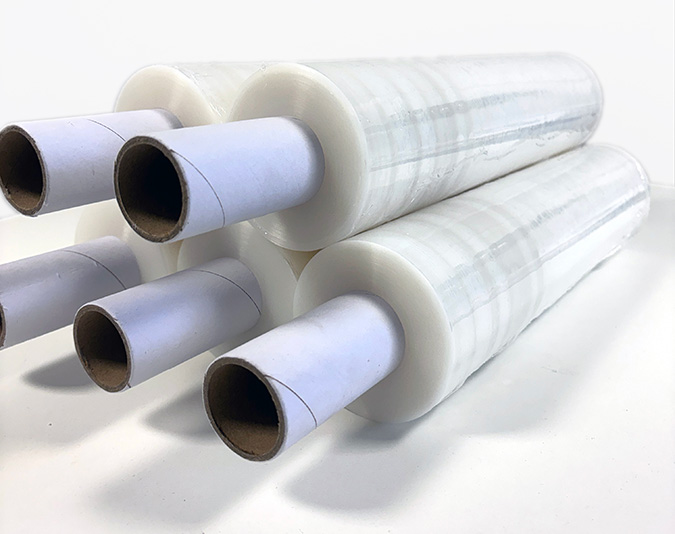
Many people consider plastic environmentally unfriendly, but it actually has a range of benefits that show it can be sustainable.
Lightweight Transportation
Plastic packaging often requires far less material than cardboard - this reduces both how much transport is needed and transport weight, as well as reducing the use of materials and associated emissions. One example of this is Polylite™, a type of polythene which is 20% lighter than normal plastic, but still maintains the same strength as traditional polythene.
Product Protection
Plastic wrap offers a strong level of product protection, including during transit. Plastic pallet covers are compatible with a wide range of industries, including agriculture, food, and drinks, and offer protection from moisture. This also helps to extend its shelf life, and their durable and tear-resistant properties help reduce damaged products and prevent food waste.
Find out more about Non-Shrink Pallet Covers
Find out more about Heat Shrink Pallet Covers
Durability
Although some plastic is single-use, other types are reusable and remain in service for many cycles. Plastic can be melted down and re-extruded repeatedly, with no fixed limit on how many times it can be recycled and reused. One example is our hand pallet wrap, a fully recyclable material which also uses 9-layer technology for added protection.
Find out more about Hand Pallet Wrap
Less Material Required
Many types of modern plastic packaging have reduced the amount of material used, decreasing both levels of waste and the use of materials, which can help sustainability. For example, PolyPCW is made from post-consumer waste, which reduces the need for virgin plastic.
The Sustainability Challenges of Plastic Packaging
While plastic offers genuine environmental advantages in certain contexts, it also presents challenges that businesses need to weigh carefully, such as:
Fossil Fuel Origins
Most plastic packaging is derived from fossil fuels, and its production contributes to carbon emissions from extraction through to manufacturing. Although recycled and bio-based plastics reduce this impact, virgin plastic is still prominent in the market, and reliance on non-renewable resources remains a significant environmental concern.
Recycling Infrastructure Limitations
Plastic can technically be recycled multiple times, but this depends heavily on local infrastructure and the type of plastic used. Not all plastics are accepted by collection schemes, and plastics can become contaminated during the recycling process. Contamination during the recycling process often reduces the quality of the resulting material. As a result, a notable proportion of plastic packaging still ends up in landfill or incineration rather than being recycled.
Persistence in the Environment
When it is not properly disposed of or recycled, plastic can persist in the environment for decades, contributing to pollution in oceans, waterways, and natural habitats.
Consumer Perception & Regulatory Pressure
Public awareness of plastic pollution has grown significantly, and this has driven scrutiny from consumers, retailers and regulators alike. Extended Producer Responsibility (EPR) regulations and plastic packaging taxes are increasingly designed to discourage unnecessary or non-recyclable plastic use, placing pressure on businesses to justify their packaging choices
These challenges do not mean plastic should be dismissed outright. Rather, they highlight why the right choice depends on the specific application, and why factors such as recycled content, reusability and end-of-life disposal all need to be considered alongside plastic's practical benefits.
The Importance of Recycled Content
Recycled content refers to products or materials that, after initial use, have been recycled and reprocessed and are used for something else. This applies to both plastic and cardboard packaging, and is one of the clearest ways either material can reduce its overall environmental impact.
Recycled content forms part of the closed-loop recycling principle in which the whole lifecycle of a material is designed with recycling and reuse in mind. For example, manufacturers design materials to be optimised for recycling, making it easier to reuse, and if designed well, this can then have multiple lifecycles serving different purposes.
Finally, this also ties into the circular economy principle - an economic model designed to eliminate waste and pollution as much as possible by using products and materials for as long as possible.
Find out more about the recycled content our products are made from
Why Lifecycle Assessments Matter More Than Material Alone
A lifecycle assessment measures the total environmental impact a product creates across every stage of its life, from raw material extraction to final disposal. Rather than asking whether a material is plastic or cardboard, a lifecycle assessment asks how that material behaves at each stage of its journey. This wider view often produces more nuanced conclusions than public perception typically allows for.
A thorough lifecycle assessment examines:
- Raw Materials: How much new material extraction the product requires, and whether manufacturers can use recycled or renewable inputs instead.
- Manufacturing: How manufacturers produce the material, and how many emissions that process generates.
- Transportation: How companies transport the material, and how much fuel and emissions that transportation demands.
- Product Use: What function the product performs, and how efficiently it performs that function.
- Product Protection: How well the packaging protects its contents from damage during handling and transit, since damaged goods create wasted materials and wasted resources.
- Reuse: Whether people can use the material more than once before it reaches the end of its useful life.
- Recycling: Whether recycling facilities can process the material, and whether it retains enough quality to become genuinely useful secondary material.
- End-of-Life Disposal: What happens once the material can no longer serve a purpose, whether that means recycling into new material, incineration, or landfill.
Packaging decisions should consider this whole environmental picture, rather than focusing solely on whether something is made from paper or plastic. Lifecycle assessments strip away assumptions and measure what actually happens, which is why they frequently challenge the simple idea that one material always beats the other.
Choosing the Right Packaging for Your Business
When you are deciding on the right packaging for your business, we strongly encourage you to think beyond the "plastic versus cardboard" conundrum. Instead, ask yourself and your colleagues an ultimate question: "Which packaging delivers the lowest overall environmental impact for this product?" Packaging sits within your wider value chain, so the right choice supports both supply chain efficiency and sustainability.
When making your packaging decisions, you should consider:
- Product Protection: Does the packaging protect your products well, or will you lose stock to damage during handling and transit? Damaged goods waste materials, money, and the resources that went into making them.
- Shipping Distances: Does your product travel a long journey to reach customers? Longer distances generate more transport emissions.
- Storage Conditions: Will your product sit in a warehouse for weeks, or does it need protection from moisture or other external factors? The right packaging keeps products usable for longer and prevents waste before they even reach the customer.
- Existing Recycling Routes: Can your customers actually recycle the packaging you choose? A material that is technically recyclable does little good if local facilities cannot process it or if customers do not have access to the right collection streams. This question is increasingly tied to EPR obligations, which hold businesses accountable for the packaging they place on the market.
- Opportunities To Reduce Packaging: Could you use less material without compromising protection? Reducing packaging volume often cuts environmental impact more effectively than switching between materials.
- Recycled-Content Materials: Does the packaging include recycled content, and can it enter the recycling stream again at the end of its life? Choosing materials with a strong circular pathway reduces demand for new raw materials.
- Customer Expectations: What do your customers expect from your packaging, and how do they dispose of it? Understanding their habits helps you choose packaging they will actually use and recycle correctly, rather than packaging that looks sustainable but gets discarded incorrectly.
Weighing these factors together gives you a far clearer picture than any single material label ever could. The most sustainable choice for your business depends on your specific product, your supply chain, and your customers, not on a blanket rule about plastic or cardboard.
Looking for More Sustainable Packaging Solutions? We’re Here To Help.
At Polythene UK, we believe sustainable packaging starts with choosing the right material for the job. Our eco-friendly product range includes recycled-content mailing bags, pallet wrap, and other polythene packaging designed to help businesses reduce waste while maintaining the performance they need.
Whether you are reviewing your current packaging or looking to lower your environmental impact, our experienced team can help you find the right solution for your business.


