Types of Scaffold Wrap: Which Solution Is Right for Your Project?

Scaffold wrap plays an important role in protecting construction sites from the elements while improving safety and security throughout a project. By enclosing scaffold structures, the right solution can help reduce weather-related disruptions, control dust, safeguard workers and the public, and even provide a more professional appearance.
However, not all scaffold wraps are designed for the same purpose. Different materials offer varying levels of weather resistance, durability, ventilation, visibility, and cost, making some options better suited to short-term projects while others are ideal for long-term construction or refurbishment work.
In this guide, we'll explain the main types of scaffold wrap, compare their advantages and limitations, and help you choose the most suitable solution based on your project's requirements and budget.
Why the Right Scaffold Wrap Matters for Construction Projects
Choosing the right scaffold wrap can improve safety, efficiency, and project performance in several ways:
- Worker Safety: Scaffold wrap helps contain loose materials and falling debris, reducing the risk of accidents both on and around the site. It can also create a more sheltered working environment by limiting exposure to wind and rain.
- Public Protection: Wrapping helps contain dust and other airborne contaminants while providing a physical barrier that discourages unauthorised access to the site. This is particularly important for projects in busy public areas.
- Weather Protection: Many scaffold wraps protect work areas from rain, wind, and other adverse weather conditions. By keeping scaffolding and materials drier, they can help reduce weather-related delays and create safer working conditions.
- Project Cost: Protecting both the structure and construction materials from the elements can reduce damage, minimise waste, and help avoid unnecessary replacement costs.
- Project Lifespan: Maintaining workable conditions throughout changing weather can help minimise disruption and keep projects on schedule. Choosing a durable wrap for longer-term projects can also reduce the need for repairs or replacement during construction.
Regulatory Context
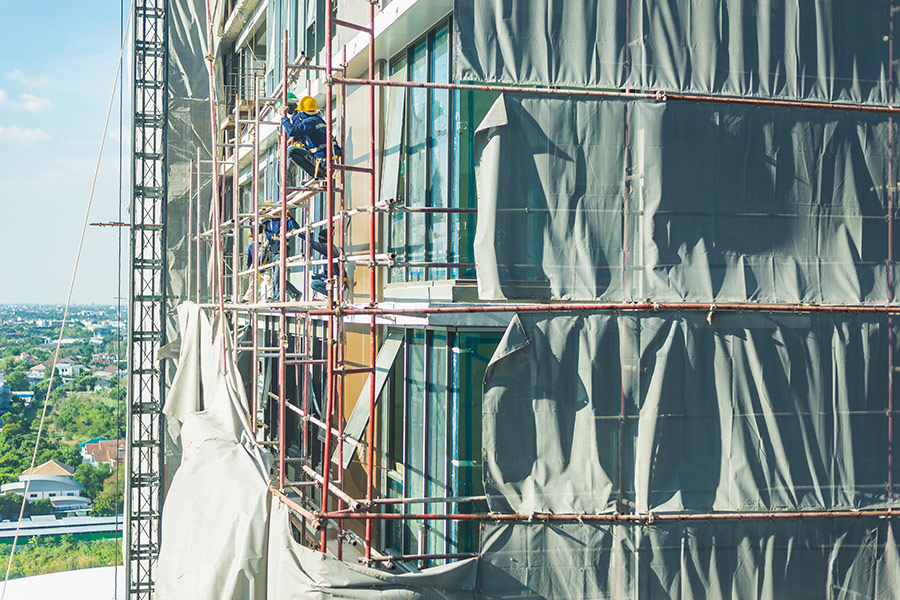
Maintaining workable conditions throughout changing weather can help minimise disruption and keep projects on schedule. Choosing a strong wrap for longer-term projects can also reduce the need for repairs or replacement during construction.
The Work at Height Regulations 2005 require work at height to be properly planned, supervised, and carried out using suitable equipment by competent people. Selecting an appropriate scaffold enclosure may form part of meeting these duties.
The Health and Safety at Work Act 1974 places a general duty on employers to provide, so far as is reasonably practicable, a safe working environment for employees and others who may be affected by construction activities.
The Main Types of Scaffold Wrap
Standard Scaffold Sheeting
Standard scaffold sheeting is one of the most widely used scaffold enclosure materials on UK construction sites.
Typically manufactured from polythene, it is secured to scaffolding using bungee cords, clips, or heat sealing to create a weather-resistant barrier.
Its lightweight design makes it quick to install and cost-effective, making it particularly suitable for short-term projects where reliable weather protection is required. Many scaffold sheeting products can also be recycled after use, subject to their condition and local recycling facilities.
Reinforced Scaffold Sheeting
Reinforced scaffold sheeting offers greater strength than standard sheeting through the addition of a woven or mesh-reinforced construction that improves tear resistance.
Its increased durability makes it well-suited to longer-term projects, exposed locations, or sites where the sheeting is more likely to experience physical wear or high wind loads.
Scaffold Shrink Wrap
Scaffold shrink wrap creates a fully enclosed, weatherproof barrier around scaffold structures, making it particularly suitable for long-term or high-profile construction projects.
The material is installed by heat-sealing individual sheets together using specialist equipment, creating a tightly sealed enclosure with minimal gaps. This reduces the risk of wind ingress while helping to contain dust and debris.
Its robust construction provides excellent resistance to weather and impact damage, making it a popular choice where reliable protection and year-round working conditions are priorities. Depending on the product specification and site conditions, scaffold shrink wrap can remain in place for extended periods before replacement is required.
Like many polythene products, scaffold shrink wrap can also be recycled where suitable facilities are available.
Scaffold Debris Netting
Scaffold debris netting is specifically designed to prevent loose materials and debris from falling beyond the scaffold structure, helping to protect workers and members of the public.
Unlike fully enclosed scaffold sheeting, debris netting allows air to circulate freely, reducing wind loading while improving ventilation for those working on site. This makes it a popular option for high-rise and other urban construction projects.
However, debris netting offers less protection from the weather than scaffold sheeting or shrink wrap and should be regularly inspected to ensure it remains securely fixed and free from excessive debris build-up.
Large Format Printed Scaffolding Wraps
Large format printed scaffold wraps are typically installed over scaffold sheeting or shrink wrap to improve the appearance of construction projects.
They can display high-quality graphics, branding, or architectural imagery, helping to enhance the visual appearance of a site while providing valuable advertising or promotional space. Printed wraps are particularly popular on developments located in busy town and city centres.
Modular Building Covers
Although not used to enclose scaffolding, modular building covers provide effective protection for construction materials before installation.
They help shield products from rain, dust, and UV exposure during on-site storage and transportation, reducing the risk of damage before materials are needed on the project.
How To Choose the Right Building Wrap for Your Structure
The table below compares the main types of scaffold wrap to help you choose the most suitable option for your construction project.
|
Types of Wrap |
Use Case |
|
Standard Scaffold Sheeting |
Short-term budget projects |
|
Reinforced Scaffold Sheeting |
Long-term projects in challenging weather environments |
|
Scaffold Shrink Wrap |
Long-term projects in public-facing environments with challenging weather |
|
Scaffold Debris Netting |
Cheaper urban high-rise projects |
|
Printed Scaffold Wraps |
Short- or long-term projects where you want to improve aesthetics and/or advertise your company |
|
Modular Building Covers |
Protecting materials ready to be used on site or when transporting materials to a site |
Sustainability
Sustainability is becoming an increasingly important consideration for construction projects, and selecting reusable or recyclable materials can help reduce environmental impact.
Many scaffold sheeting and shrink wrap products can be recycled after use, provided they are sufficiently clean and accepted by local recycling facilities. Where practical, these materials may also be reused across multiple projects if they remain undamaged.
Scaffold debris netting may also be recyclable, although contamination from construction materials can sometimes require specialist recycling services.
Similarly, modular building covers can often be recycled once they have reached the end of their service life, provided they are not heavily contaminated.
Recap
Choosing the right scaffold wrap depends on the specific requirements of your project.
Before selecting a solution, consider:
- The level of worker and public protection required
- The expected weather conditions
- Project duration
- Budget
- The level of durability needed
- Whether branding or visual appearance is important
- Sustainability and end-of-life recycling options
Selecting the appropriate scaffold wrap from the outset can help improve site safety and protect both your workforce and your project.
Get a Professional Wrapping Quote Today
Looking for high-quality scaffold wrap for your next construction project?
Polythene UK supplies a comprehensive range of protective construction wraps to customers across the UK. Our experienced team can help you identify the most suitable product for your application and provide free samples so you can assess the material before ordering.
Get in touch and get a wrapping quote today, or contact the team on 01993 777950


