How can you recycle plastic bags

Plastic bags are still a big problem for the environment in the UK, even though the number used has dropped sharply. In 2022–2023, large retailers in England sold around 406 million single-use plastic carrier bags. That’s a huge improvement compared to the 7.6 billion bags handed out in 2014, thanks to the carrier bag charge. This change has led to a 98% drop in plastic bag use among major shops, but the issue hasn’t gone away.
Many plastic bags still end up in landfill or as litter. Bags in the environment break down into smaller pieces called microplastics, which can last for hundreds of years. These tiny plastics often end up in rivers, the sea, and even inside wildlife, causing harm to animals and the wider ecosystem.
Plastic bags cannot go in your regular bin or be left with most kerbside recycling. They jam recycling machines and can spoil whole loads of recycling. This makes it important to handle them the right way — otherwise, the problem only gets worse. So never put plastic bags or soft plastic films in the regular household recycling bin — even if they look clean. Save them for store drop-off points instead.
Table of contents:
- Where to recycle plastic bags in the UK
- What types of plastic bags and films can be recycled?
- What happens to plastic bags after recycling?
- What about biodegradable and compostable plastic bags?
Where to recycle plastic bags in the UK
You can’t recycle plastic bags at home, but you can still recycle them at many major supermarkets. Most large chains in the UK now offer in-store collection points for plastic bags and other soft plastics.
Supermarkets that offer this service include:
- Tesco
- Sainsbury’s
- Asda
- Morrisons
- Waitrose
- The Co-op
These stores often have dedicated recycling bins near the entrance or exit. You can drop off clean plastic bags and other soft plastics when you do your shopping.
How to find your nearest drop-off point:
- Use the recycle now locator – Visit recyclenow and enter your postcode to see nearby collection points.
- Check supermarket websites – Some stores have their own recycling schemes listed online. Look for their “store services” or “recycling” sections.
- Ask in store – If you’re unsure, staff can usually confirm whether that location has a soft plastics bin.
It’s a good idea to collect bags at home and take them in bulk during your regular shop. Just make sure everything you bring is clean and dry.
What types of plastic bags and films can be recycled?
Not all soft plastics are the same. Some can go in supermarket recycling bins, while others need to be put in the general waste. A good rule of thumb is: if the plastic is soft, flexible, and not crinkly or foiled, it’s more likely to be accepted.
Before recycling, check the packaging for this label: “Recycle with bags at larger stores – not at kerbside.” If you see this, and the material is clean and dry, it’s suitable for supermarket collection points.
Common items that can be recycled:
- Bread bags
- Carrier bags (including ‘bags for life’)
- Fruit and vegetable bags
- Cereal box liners
- Plastic wrappers from toilet rolls and kitchen rolls
- Plastic multipack wrappers (e.g. bottled water, tins)
- Frozen food bags
- Magazine and newspaper wrap
- Delivery bags and mailing plastic
- Pasta, rice, and salad bags
- Low-density polyethylene (LDPE) items – often marked with resin code 4
Items that cannot be recycled:
- Cling film
- Crisp packets
- Salad/fruit netting with metal clips
- Compostable or biodegradable plastic bags
- Food and drink pouches
- Bubble wrap
- Film lids from food trays
- Wrappers that feel crinkly or foil-like (e.g. from bakery items or sweets)
If you are in doubt, leave it out — or ask at the store before dropping it in the bin. Keeping unrecyclable items out helps avoid contamination and ensures the material collected can actually be reused.

What happens to plastic bags after recycling?
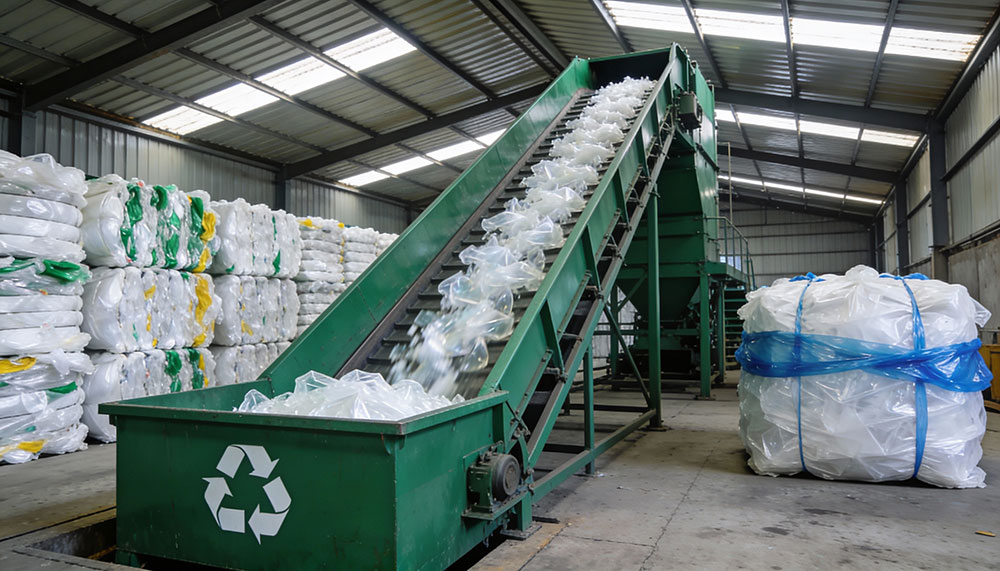
Once you drop off your plastic bags at a supermarket collection point, they’re sent to specialist recycling facilities. These centres are designed to handle soft plastics, which require a different process from standard household recyclables.
The first step is separation, where plastic bags are sorted from other materials. They are then cleaned to remove any dirt, labels, or leftover residue. After that, the bags go through processing, where they’re melted down and turned into small plastic pellets.
These pellets can then be used to make a range of new products, including:
- More plastic bags and bin liners
- Plastic “lumber” used for park benches, fencing, and decking
- Packaging materials and containers
What they become depends on the quality of the recycled plastic and market demand. While some plastic film is still turned into lower-grade products, recycling helps keep these materials in use and out of landfill.
The recycling market can shift over time, but most properly sorted and prepared bags are reused in some way. Keeping your bags clean and using the correct bins helps make sure they don’t go to waste.
What about biodegradable and compostable plastic bags?
Biodegradable and compostable bags might sound like a better choice, but they can’t be recycled with regular plastic bags. These bags are made from different materials that can contaminate the recycling process and lower the quality of the recycled plastic.
Most biodegradable and compostable bags also aren’t suitable for home composting. They usually need high temperatures and controlled conditions, which are only available at specialist industrial composting facilities. These facilities are not widely available, and most local councils don’t collect this type of waste separately.
If you’re unsure what to do, then place these bags in your general waste bin unless your local authority gives other instructions. Putting them in the wrong bin can do more harm than good.
Looking for a Better Way to Recycle Large Volumes of Plastic Bags?
If your business handles a high volume of polythene waste — like shrink wrap, pallet covers, or plastic bags — you don’t need to rely on supermarket drop-offs. Through Polythene UK’s free PCW collection scheme, you can recycle post-consumer waste directly and avoid the cost of landfill or incineration.
We’ll collect your clean, sorted polythene waste and ensure it’s turned into new products using our certified closed-loop process. It’s free, easy to set up, and helps your business reduce waste without the hassle.
Interested? Get in touch to see if your business qualifies.


